Why Online Casinos Are Dressing Up as Your Favorite Movies
By MHB Admin ·
The modern online casino has a branding problem, and its solution looks a lot like a film set. For an industry built on cold mathematics — house edges, RTP percentages, wagering requirements — operators have discovered that the surest way to win a younger audience is to stop talking about gambling altogether and start talking about vibes.
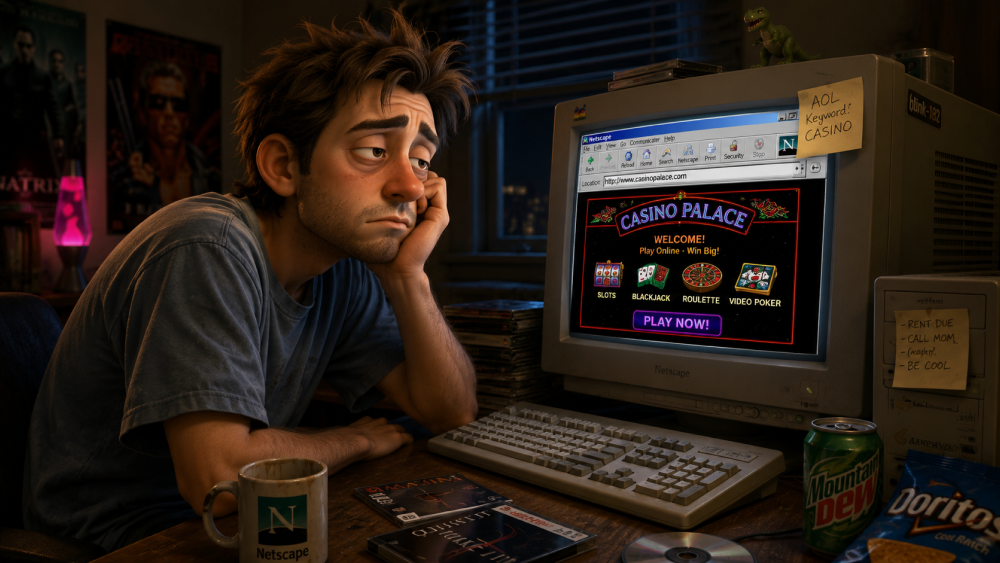
Millennials, the demographic every operator is now chasing, did not grow up on velvet ropes and chandeliers. They grew up on franchises, cartoons, and quotable cult films. So instead of selling the green baize of a Monte Carlo table, today's casinos sell a feeling of familiarity — a world the player already knows how to love before they have placed a single bet.
The first wave of this was simple genre cosplay. Cowboy casinos turned the lobby into a dusty frontier saloon, all sepia tones, spurs, and high-noon showdowns reframed as jackpot duels. Pirate casinos did the same with treasure chests, kraken-green color schemes, and the promise of buried bonus loot. These themes work because they are archetypes: nobody owns the idea of a cowboy or a pirate, and everybody understands the shorthand instantly. A player does not need an explanation for why a treasure map leads to free spins.
But archetypes are broad, and the new frontier is far more specific. The most interesting operators have moved from genre to genuine cultural memory — leaning on the texture of beloved films and characters rather than generic tropes.
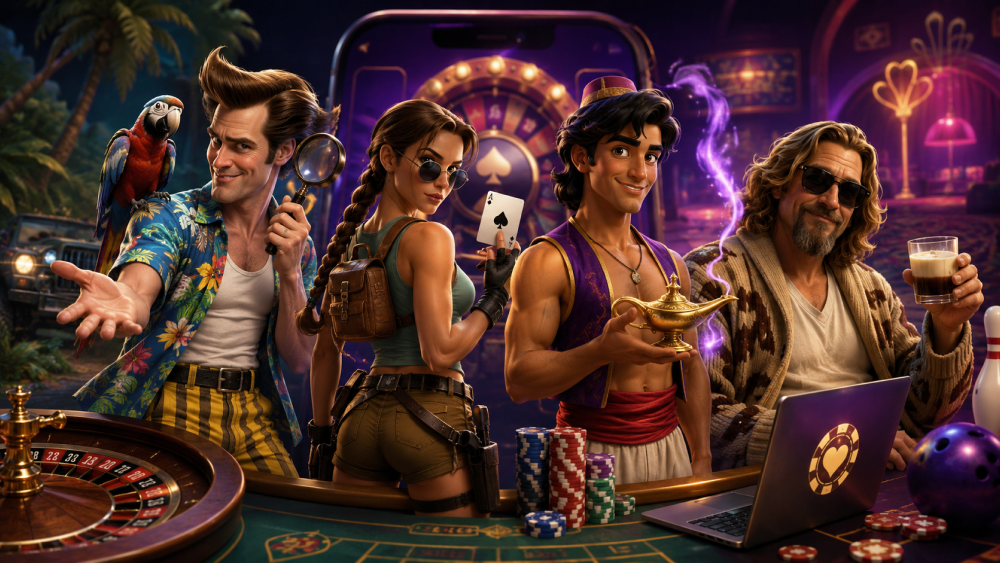
Consider the Arabian-nights aesthetic that borrows liberally from the Aladdin universe. Lamps, genies, magic carpets, and a palette of gold and midnight blue evoke a story most players have known since childhood. The casino never has to mention the film by name; the visual grammar does the work, and the player fills in the warmth of the memory themselves.
Dudespin takes this even further by channeling The Big Lebowski. The whole brand is built around the slacker-cool serenity of the Dude — bowling-alley palettes, a White Russian sense of humor, and copy that abides rather than hustles. It is gambling reframed as a laid-back hobby, the antithesis of the high-pressure casino floor. For a generation suspicious of being sold to, a brand that seems too relaxed to care is paradoxically a powerful pitch.
The newest entry in this lineage is Shikaka, which wraps itself in full Ace Ventura adventure energy. The name alone is a wink — anyone who remembers the film hears the chant instantly — and the brand leans into rubbery, screwball comedy, jungle-explorer set pieces, and the manic optimism of a hero who treats every problem as an absurd quest. It is nostalgia delivered as a punchline, and for the right player that punchline lands before the first reel spins.
Why does this work so well on millennials specifically? Partly it is recognition: a familiar reference lowers the cost of trust in an industry where trust is scarce. Partly it is irony. This is a cohort fluent in memes and self-aware marketing, and a casino that knows it is being a little ridiculous reads as honest rather than predatory. And partly it is the simple economics of attention in a crowded market. A themed world is shareable, screenshot-friendly, and sticky in a way that a plain, generic slots grid never will be.
There is, of course, a tightrope underneath all of this. These brands evoke rather than license. They trade on the feeling of Aladdin, Lebowski, or Ace Ventura without paying for the rights, staying carefully on the safe side of parody, homage, and general aesthetic. It is a deliberate strategy: capture the emotional payload of a cultural touchstone while owning none of the legal baggage. The vibe is the product, and the vibe is conveniently unownable.
The risk is that the gambling itself disappears behind the costume — that players are charmed by a Dude-shaped mascot into forgetting they are still playing games with a built-in house edge. The mechanics under the theme do not change, no matter how friendly the lobby looks.
Still, the direction of travel is clear. The next great casino brand will not advertise better odds or bigger bonuses. It will offer a world the player already misses, and quietly sell the reels inside it.