The Studio That Deletes Its Own Movies
By MHB Admin ·
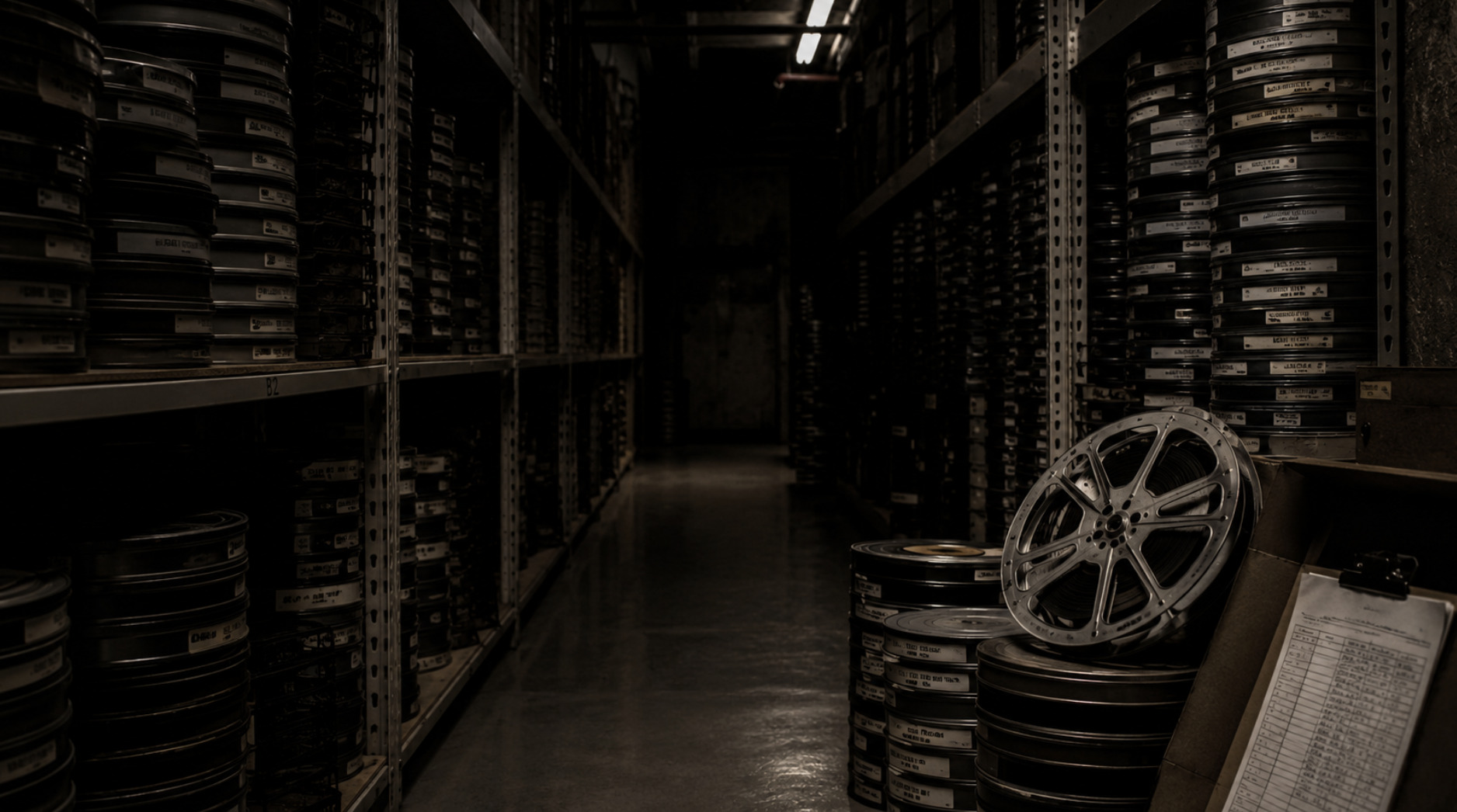
In 2022, Warner Bros. Discovery did something that, a generation earlier, would have been almost unthinkable. It took a finished film — Batgirl, completed, scored, ready to release — and made it disappear. Not delayed, not buried in a quiet release window, but written off entirely as a tax loss and locked away where no one would ever see it. The studio later did the same with the completed animated feature Coyote vs. Acme. The logic was not artistic and not even commercial in the usual sense. It was accounting: a finished movie was worth more to the company as a deduction than as a thing audiences could watch.
Around the same time, the newly merged company began pulling titles from its streaming service in waves — original series and films, some of them recent, some of them the only place a given work existed. Subscribers who had been told they were building a library discovered they were renting access to one, and that the shelves could be cleared at will. Other platforms followed the pattern. Across the industry, "content" that had been streamed as permanent began to evaporate, and the people who made it sometimes learned their work was gone the same way the public did.
The entertainment press covered all of this, but it covered it the way it covers everything: as business news. A removal here, a write-down there, a quote from an analyst about subscriber churn and quarterly strategy. Each story was self-contained, each deletion an isolated decision with its own corporate rationale. What went almost entirely unsaid was the thing the individual stories add up to — that the cultural record of the present era has quietly become contingent on the tax position and balance-sheet mood of a handful of conglomerates.
This is a genuinely new condition, and it is worth stating plainly. For most of the twentieth century, a finished film or a broadcast show entered the world and stayed there. It might be hard to find, but it existed — on celluloid, on tape, on a disc in someone's home, in an archive, in the wild. Ownership was distributed. A studio could regret a release, but it could not reach into ten million living rooms and erase it. The shift to streaming reversed that. When the only copy lives on a corporate server, the corporation holds a delete key over the culture, and it has every financial reason to press it.
The incentives all point one direction. Hosting costs money. Residuals and licensing cost money. A title that is not driving subscriptions is, on the spreadsheet, a liability, and a never-released film can be a windfall if it is converted into a write-off. None of this involves malice toward art; it involves indifference to it, which is worse, because indifference scales. The decision to erase a work is made by people for whom the work was never anything but a line item, and the line item is losing.
What makes the phenomenon so easy to overlook is that nothing visibly breaks. There is no fire, no censorship board, no dramatic act of destruction to photograph. A title simply is not there anymore. The absence is silent and total. And because each disappearance is small, and because there is always a new release to discuss, the entertainment conversation flows on around the gaps without registering them. The press is structurally built to cover what is launching, not what has been quietly unmade.
The losses are not evenly distributed, either. Blockbusters with physical releases and devoted fan bases survive; they get reissues, collector's editions, preservation campaigns. The work most likely to vanish is the midlist and the marginal — the smaller series, the niche documentaries, the films by newer or less famous makers, the very work that the streaming era was supposed to make findable. The platforms that promised to democratize access have instead concentrated the power to deny it, and they are exercising that power against precisely the material that has nowhere else to live.
It is tempting to treat this as a minor industry quirk, a problem for cinephiles and completists. It is not. A society's entertainment is part of its memory of itself — how it talked, what it found funny, what it feared, who got to tell stories and who didn't. When that record can be revised downward by quarterly necessity, the past stops being fixed and starts being editable. We are used to thinking of cultural loss as something that happens slowly, through neglect and decay. The studios have shown that, in the streaming age, it can also happen instantly, deliberately, and for a tax benefit — and that almost no one will report it as anything more than a footnote in an earnings call.