Lost, Pulled or Out of Print? How Films, Shows and Games Really Disappear
By MHB Admin ·

In May 2023, Disney told investors it would remove dozens of titles from its Disney+ and Hulu streaming services, including shows the company had commissioned itself. Among them was Willow, a fantasy series that had premiered only months earlier. Disney said it expected to record a charge of roughly $1.5 billion to $1.8 billion against the value of the content it was pulling. For viewers, a series that had existed only on one service now existed nowhere they could legally watch it.
Episodes like this are often described as "erasing" culture, and the language is understandable. But it collapses several very different things into one. A work that is physically destroyed is lost. A work that its owner chooses not to sell is unavailable. A work that cannot be sold because its rights are tangled is stuck. A work that depends on a server that has been switched off may survive as files nobody can run. These situations have different causes, different remedies and very different implications for whether a piece of culture will still exist in fifty years.
This article separates them, using the historical record of film, the newer record of streaming and digital storefronts, and video games, which have become the clearest test case for what happens to culture when distribution moves entirely into software.
Two questions that are usually confused
Any discussion of disappearing entertainment involves two separate questions.
The first is preservation: does a complete, usable copy of the work survive somewhere, in a form that could be shown, played or copied again? Archives, libraries, studios and private collectors are responsible for this.
The second is availability: can an ordinary person legally watch, hear or play the work today, through a shop, a streaming service, a broadcast or a library? Rights holders and the distributors they license control this.
The two often diverge. A film can be carefully preserved in a studio vault or a national archive and still be commercially unavailable for decades. A show can be taken down from a streaming service while its master files remain safely stored. And a work can be freely available online in an unauthorised copy while no official copy exists anywhere.
html
<table>
  <thead>
    <tr>
      <th>Type of disappearance</th>
      <th>Does a copy survive?</th>
      <th>Can the public legally access it?</th>
      <th>Typical cause</th>
      <th>Example</th>
    </tr>
  </thead>
  <tbody>
    <tr>
      <td>Physical loss</td>
      <td>No</td>
      <td>No</td>
      <td>Decay, fire, deliberate destruction</td>
      <td>Most American silent feature films</td>
    </tr>
    <tr>
      <td>Withdrawn by the owner</td>
      <td>Usually yes</td>
      <td>No</td>
      <td>Business or reputational decisions</td>
      <td>Streaming originals removed for financial reasons</td>
    </tr>
    <tr>
      <td>Rights blocked</td>
      <td>Usually yes</td>
      <td>Often no, or only in altered form</td>
      <td>Expired licences for music, footage or underlying works; disputed ownership</td>
      <td>Television series released on home video with replaced music</td>
    </tr>
    <tr>
      <td>Licence expiry or territorial gaps</td>
      <td>Yes</td>
      <td>Depends on country and date</td>
      <td>Fixed-term or region-specific distribution deals</td>
      <td>Films rotating off a streaming service or available in one country only</td>
    </tr>
    <tr>
      <td>Platform or server shutdown</td>
      <td>Sometimes, but may be unusable</td>
      <td>No new access; sometimes none at all</td>
      <td>Closure of digital storefronts or online services</td>
      <td>Digital-only games sold through discontinued shops</td>
    </tr>
  </tbody>
</table>
The first great disappearance was physical
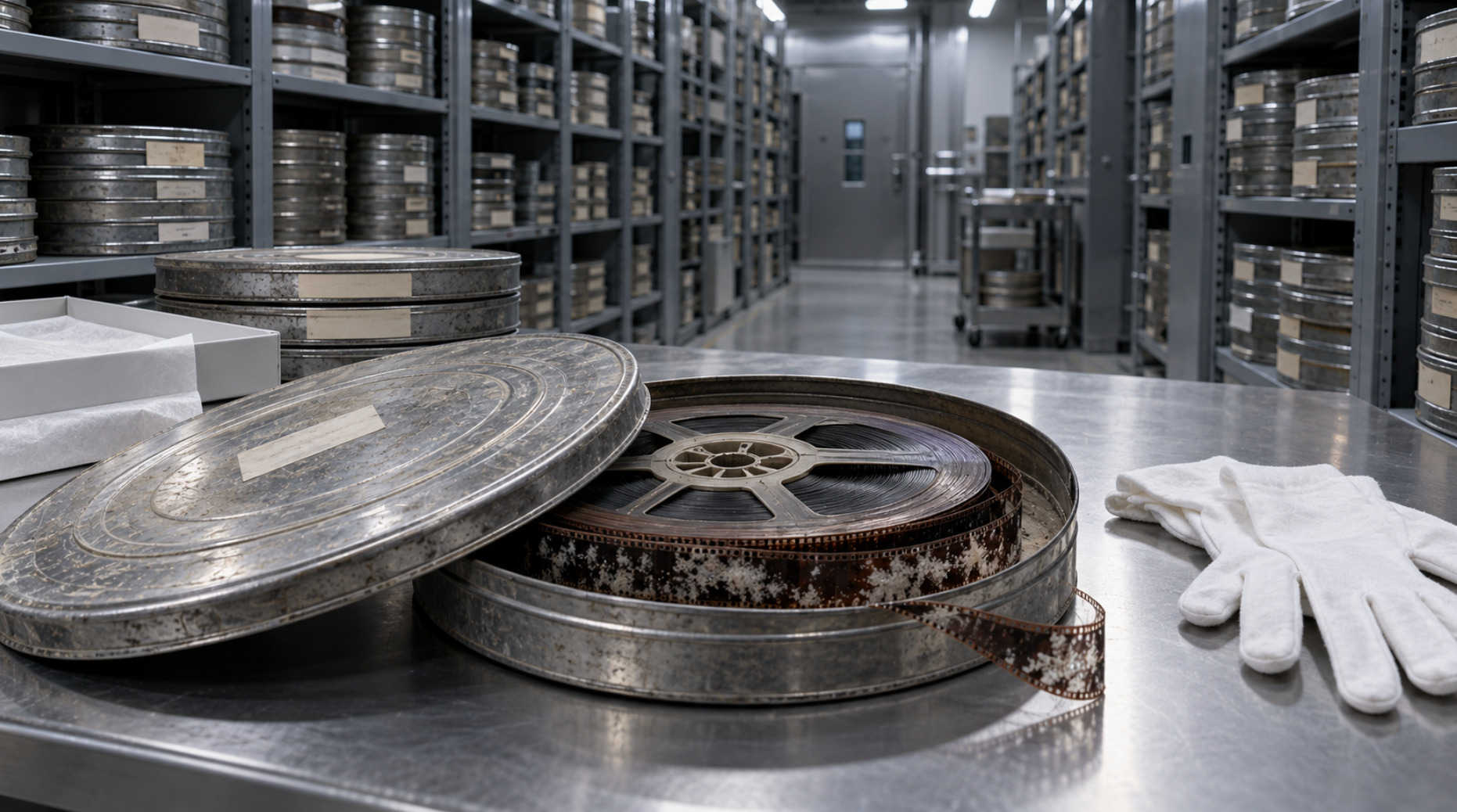
For most of the twentieth century, entertainment disappeared because the objects carrying it were destroyed.
The best-documented example is the American silent feature film. In 2013, the Library of Congress published a study by film historian David Pierce of 10,919 silent feature films released by American studios between 1912 and 1929. About 14% survived in complete form in their original 35mm format, and about 11% survived complete but only in foreign release versions or lower-quality formats such as 16mm. Roughly 75% were lost entirely.
The causes were partly chemical and partly commercial. Films of that era were shot and printed on cellulose nitrate stock, which is highly flammable and decays over time, sometimes turning into a sticky mass or powder. A 1937 fire in a Fox storage vault in New Jersey destroyed the original negatives of most of the studio's pre-1935 films. Just as important, studios had little reason to keep old prints. Once a film's theatrical run was over, it had no obvious further market until television arrived, and prints were often destroyed or melted down to recover their silver.
The lesson is that early films were not lost primarily through accidents. They were lost because their owners saw no future commercial value in keeping them, and no institution was responsible for keeping them instead. Organised film archiving in the United States developed slowly, and much of what survives today was saved by archives, collectors and foreign distributors rather than by the studios themselves.
That history matters because it is the clearest precedent for the current debate. Commercial owners decide what to keep based on expected revenue. When expected revenue is low, culture is at risk, regardless of the technology involved.
Streaming changed availability, not ownership
Streaming services are often described as libraries, and their interfaces present them that way. In practice, most of what they show is licensed, and even their "originals" are a mixture of ownership arrangements.
A streaming service typically has three kinds of content. It has content it owns outright, produced by its own studio or acquired with full rights. It has commissioned content, made for it by independent producers or other studios, where the service holds exclusive distribution rights for a period and in specific territories while ownership may stay with the producer. And it has licensed content: films and series it pays to show for a fixed term, often only in certain countries.
The label "original" usually describes where a title premiered, not who owns it. Netflix's House of Cards, for example, was produced by Media Rights Capital and licensed to Netflix. Whether a service can keep a title, move it elsewhere or sell it to a rival depends on contracts that viewers never see.
Licensed films and series rotate off services when deals expire, and they may reappear elsewhere. That is the oldest and most common form of streaming disappearance, and it is largely a continuation of how television and cable distribution always worked. Films moved between broadcast, pay television and home video in a sequence of windows, each governed by its own licence.
What changed after 2022 was something new: services removing content they owned or controlled outright, not because a licence expired but because keeping it cost money.
Why owners remove their own shows
In 2022 and 2023, several large media companies removed original films and series from their own services. Warner Bros. Discovery, formed in April 2022, removed numerous titles from HBO Max in the months that followed, and shelved the largely completed film Batgirl rather than release it. Disney followed in 2023 with the removals from Disney+ and Hulu. In a regulatory filing in June 2023, Disney disclosed impairment charges of about $1.5 billion on removed content and indicated that further removals would bring additional charges.
The reasoning behind these decisions is partly about accounting. When a company concludes that a film or series will no longer earn enough to justify its value on the balance sheet, it can write down that value, recording an impairment charge. Taking a title off its platform supports the conclusion that it will not earn further revenue there. Industry reporting has also pointed to ongoing costs that a title on a service can carry, such as residual payments to talent and music licence fees. Those costs end, or change, when the title is removed.
Removal from a service is not the same as destruction. Several titles removed by Warner Bros. Discovery were later licensed to free, advertising-supported streaming services operated by other companies. That suggests the main motive was to move the content from a subscription service to another revenue stream, not to erase it. Others have not reappeared anywhere. Their files presumably still exist on company servers, but no one outside the company can verify how, or for how long, they are being kept.
This is the key difference from the silent era. The digital master of a streaming series is almost certainly preserved somewhere, at least for now. But its availability is entirely at its owner's discretion. Unlike a film released in cinemas or on disc, a series made only for streaming may never have existed in any form the public could keep.
When rights make a work impossible to sell
Some works disappear not because anyone wants them to, but because no one can legally sell them in their original form.
A film or television series is a bundle of rights: the screenplay and any underlying book, the performances, archival footage, artwork and, above all, music. Licences for those elements are often limited by time, territory or format. A song licensed in the 1970s for broadcast television may not have been licensed for home video, which barely existed at the time, let alone for streaming. When a show is later released in a new format, every rights holder must agree again.
That is why several classic television series appeared on home video with their original music replaced by cheaper alternatives. The sitcom WKRP in Cincinnati is a well-known example. The rights to the rock songs used in the original broadcasts were too expensive or complicated to renew, so much of the music was replaced for home video releases. The original broadcast version survives in archives, but the commercially available version is different.
Other works are blocked by disputes over ownership, by contracts that no one can now interpret, or by companies that have gone out of business without clear successors. Still others are withheld by owners who consider them commercially or reputationally unattractive. Disney has never released its 1946 film Song of the South on home video in the United States. The film is preserved, but the company has chosen not to make it available.
Rights problems are particularly severe for music and for anything that combines many licensed elements. They are one reason why a substantial part of twentieth-century film and television is preserved but unavailable.
What happens when the shop itself closes
Digital storefronts introduced a newer kind of risk. When people buy a film, album or game as a download from an online shop, they usually acquire a licence to use it under the shop's terms, not ownership of a copy in the traditional sense. If the shop closes, existing downloads may keep working on the device where they were stored, but no new copies can be bought. Re-downloading can become impossible, and content tied to online authentication can stop working entirely.
In March 2023, Nintendo closed the eShop for its Wii U and 3DS consoles. Games sold only digitally on those platforms could no longer be bought from that point. People who already owned them could still re-download them, but anyone who did not could no longer acquire them legally.
Online-only games are more fragile still. Games that require a connection to the publisher's servers can stop working entirely when those servers are switched off, even for people who paid for them. Files may survive on players' machines, but without the server they cannot be run as intended.
These practices have begun to attract legislation. In September 2024, California enacted Assembly Bill 2426, which took effect on 1 January 2025. It restricts sellers of digital games, films, music and e-books from using words such as "buy" or "purchase" in ways that suggest ownership. The restriction applies unless the seller clearly states that the customer is acquiring a licence, or obtains the customer's affirmative acknowledgement of the terms. Subscription services and goods that cannot be revoked, such as permanent offline downloads, are exempt. The law changes how licences are described. It does not stop licences from being revoked.
Video games, a test case for the digital era
Video games show the gap between preservation and availability most clearly, because so much of their history has been released only in forms that are now hard to sell or run.
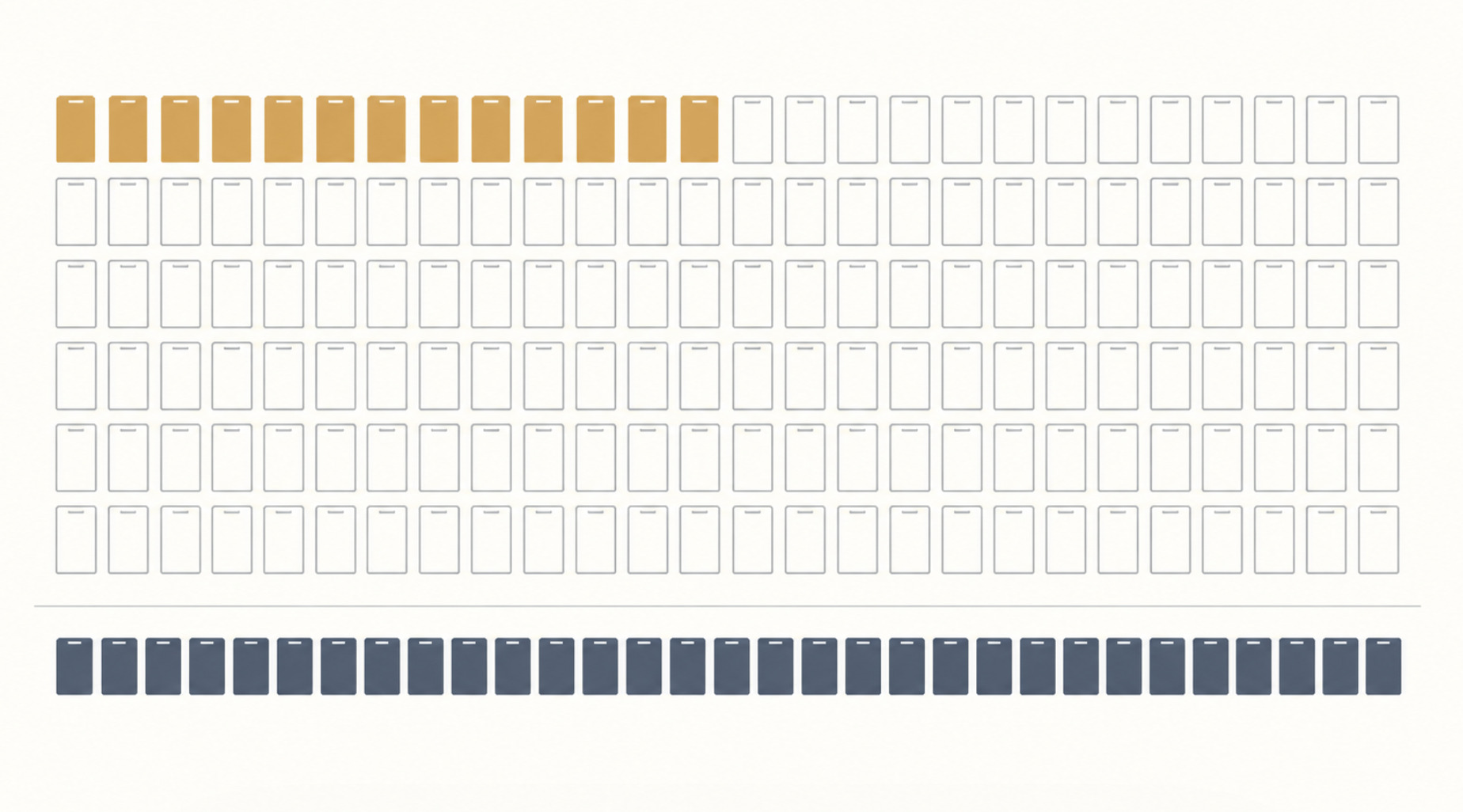
In July 2023, the Video Game History Foundation and the Software Preservation Network published a study of a random sample of 1,500 games released in the United States. It found that 87% of classic games were not commercially available on any current platform. In no period of game history studied did availability reach 20%. The authors described these games as critically endangered.
Not available does not mean lost. Many of those games survive on original cartridges and discs, in private collections, in museum and library holdings and in unauthorised digital copies. But the legal routes to make them widely accessible are narrow. Under US copyright law, libraries and archives may preserve copies and, in limited circumstances, circumvent copy protection for preservation. They cannot generally make video games remotely available to researchers. In its October 2024 review of exemptions under the Digital Millennium Copyright Act, the US Copyright Office declined to grant an exemption that would have allowed libraries to provide remote access to out-of-print games for research. The Entertainment Software Association, which represents game publishers, opposed the request.
The result is a situation that parallels the silent-film era in one way and differs in another. As with early films, most of the commercial history of the medium is no longer for sale. Unlike early films, much of it still physically exists, and the main obstacle to access is legal rather than physical.
Who is keeping copies
Responsibility for preserving entertainment is spread across several kinds of institution, none of which covers everything.
Rights holders keep the masters of works they consider valuable. Their incentive to preserve rises and falls with expected revenue, and history shows that it can fall to zero.
National institutions such as the Library of Congress collect and preserve films, recordings and broadcasts, partly through copyright deposit. In the United States, the National Film Registry also designates culturally significant films for preservation. These institutions can preserve far more than they can legally show.
Specialist archives and nonprofits, including film archives, broadcast archives and game-history organisations, fill gaps in particular media, often with limited funding.
Private collectors have repeatedly been the last source of works that institutions failed to keep, from silent films found in foreign archives to television episodes recovered from home recordings.
Digital distribution has created a gap in this system. A film released in cinemas or on disc produces physical copies that end up in many places. A series released only on a streaming service, or a game sold only as a download, may exist in only one company's servers. Its survival depends on that company's decisions, and the public has no right to see it there.
What the record suggests
The history of disappearing entertainment points to a few conclusions that apply across media.
Physical loss was mainly a problem of the twentieth century. Modern digital masters are easier to copy and store, and large companies are unlikely to destroy valuable content deliberately. Whether they will keep less valuable material for decades, through mergers, bankruptcies and format changes, is much less certain.
Commercial unavailability is now the main way works disappear from public view. It results from licence expiries, rights problems, business decisions to remove content and closures of digital shops and servers.
Ownership determines everything. Whether a work stays available depends on who controls its rights and what they gain from making it available. Changes in ownership through mergers and acquisitions have repeatedly triggered changes in what is available.
The law has only begun to address the problem. Disclosure rules such as California's tell buyers that they are acquiring a licence. Preservation exemptions allow archives to keep copies. Neither guarantees that the public will be able to see or play those works.
For viewers, the practical lesson is to distinguish between "gone from my service" and "gone". For the future of culture, the more important question is who will keep copies of works whose owners no longer think they are worth selling. Eventually that will include most of them.