The Human Cost of High-Speed Warehouse Operations
By MHB Admin ·
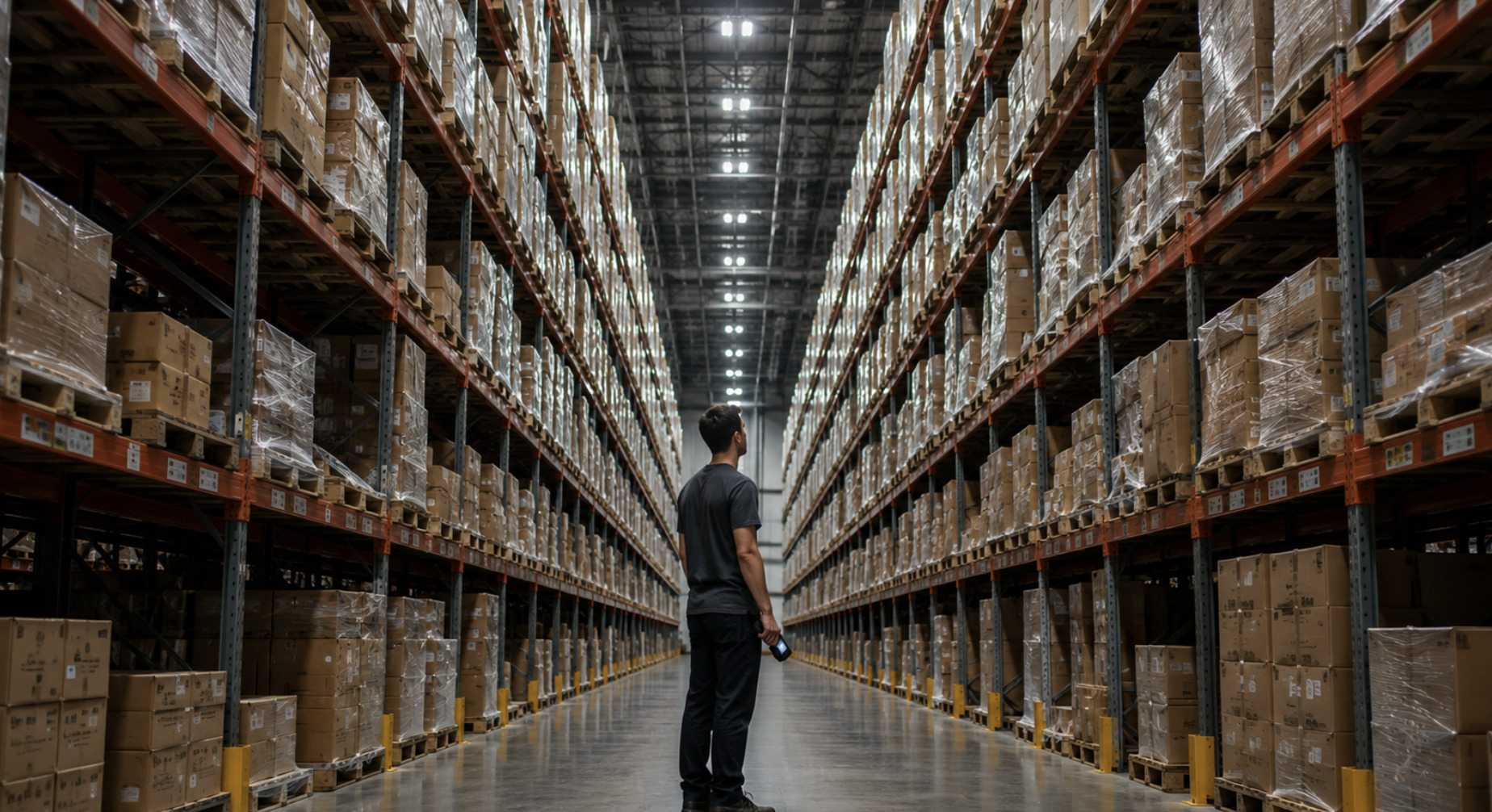
The promise of modern commerce is that the gap between wanting something and holding it should approach zero. Tap a screen in the evening, and the package is at the door by morning. That speed feels like magic, and like most magic it depends on hiding the mechanism. The mechanism, in this case, is a vast network of fulfillment centers and the people inside them, moving at a pace set not by human limits but by software — and the documented result is an injury crisis that the celebration of convenience is built to obscure.
The numbers have been assembled, repeatedly, by people willing to read the government's own records. Analyses of federal injury data by the Strategic Organizing Center and others have found that serious-injury rates in the warehousing sector, and at the largest e-commerce operators in particular, run well above the average for private industry — in some accounts roughly double. These are not paper cuts. They are the musculoskeletal injuries of repetitive strain: backs, shoulders, knees, and wrists worn down by lifting, twisting, and reaching thousands of times a shift, day after day, at a cadence that does not relent.
The cause is not mysterious, and it is not primarily carelessness. It is the rate. Many large warehouses run on productivity quotas enforced by continuous electronic monitoring — systems that track how many items a worker handles per hour and how much "time off task" elapses between scans, with discipline or termination waiting at the bottom of the metrics. When a human body is managed like a component in a logistics algorithm, optimized for throughput and measured to the second, the predictable outcome is that the body fails on the algorithm's schedule rather than its own. Workers describe skipping water and bathroom breaks to protect their numbers. The injuries follow the incentives.
What compounds the harm is how it is recorded, or not. Worker advocates and some regulators have raised persistent concerns about the underreporting and mismanagement of injuries — pressure to treat serious strains as minor first-aid cases, on-site medical units that send injured workers back to the line, classifications that keep incidents off the books that trigger scrutiny. If the official figures are already elevated, and the official figures may understate the reality, then the documented crisis is a floor, not a ceiling. The true cost is, almost by design, difficult to count.
This is where the framing matters, and where the press tends to fail. Coverage of the delivery economy is overwhelmingly consumer-facing and admiring: the speed, the convenience, the logistics marvel of getting a parcel across the country overnight. When labor conditions appear, they appear seasonally — a holiday-rush story, a single facility, a union drive treated as a business-section dispute about wages and organizing. The structural fact rarely surfaces in plain terms: that the convenience itself, the very feature being sold, is produced by a pace of work that injures people at elevated rates, and that this is a known and ongoing condition rather than an occasional scandal.
It is worth being precise about the trade that is actually occurring. The cost of next-morning delivery has not been eliminated by clever engineering; it has been relocated. It has been moved off the price tag, where the consumer would see it, and onto the workers' bodies, where the consumer never has to. The externality is human. Every hour shaved off a delivery window is, somewhere upstream, an hour of intensified strain on a person whose continued employment depends on absorbing it quietly. That is not a flaw in the system the customer experiences. It is the system the customer does not experience.
None of this requires imagining that warehouse operators are uniquely villainous. They are responding rationally to a market that rewards speed and to consumers who have been trained to expect it for free. That is precisely why the silence is the problem worth naming. A harm that is dispersed across hundreds of thousands of workers, hidden inside windowless buildings, measured in chronic injuries rather than dramatic events, and folded invisibly into a service everyone enjoys, is a harm with no natural constituency in the news. It does not interrupt anyone's life except the lives of the people it breaks.
The package arrives on time. That is the entire point, and it is also the whole problem. The on-time arrival is the proof that the system worked, and the worn-out shoulder a thousand miles away is the part of the proof that never ships. A labor story that the convenience economy depends on you not connecting to your own front porch is the kind of story a publication exists to connect — because the speed is real, the bodies are real, and the link between them is the thing most carefully kept out of frame.