
The Right to Repair and the Quiet War Over Fixing What You Own
By MHB Admin ·
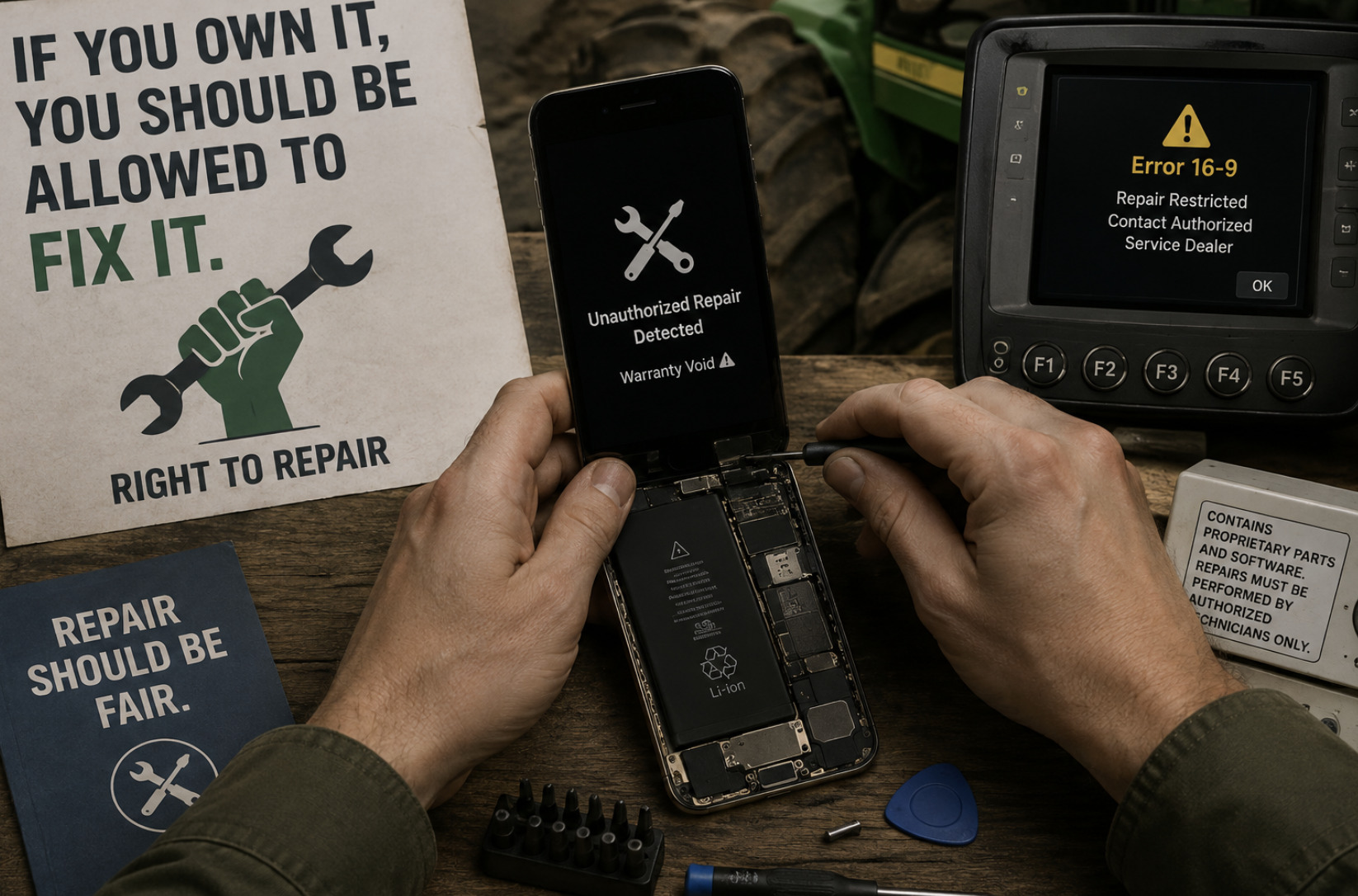
There is a strange assumption buried in modern ownership: that buying something entitles you to use it, but not necessarily to fix it. Break the screen on your phone, and repairing it may void your warranty. Try to mend your own tractor, and the software may lock you out until an authorised technician arrives. Attempt to replace a part in a medical device, an appliance, or a laptop, and you may find the manufacturer has designed the thing specifically so that you cannot. This is the terrain of the right-to-repair fight — a slow, under-covered struggle over whether the people who buy products are allowed to fix them, or whether that right belongs to the manufacturer alone. It is a fight about ownership itself, and about who profits when repair is made difficult on purpose.
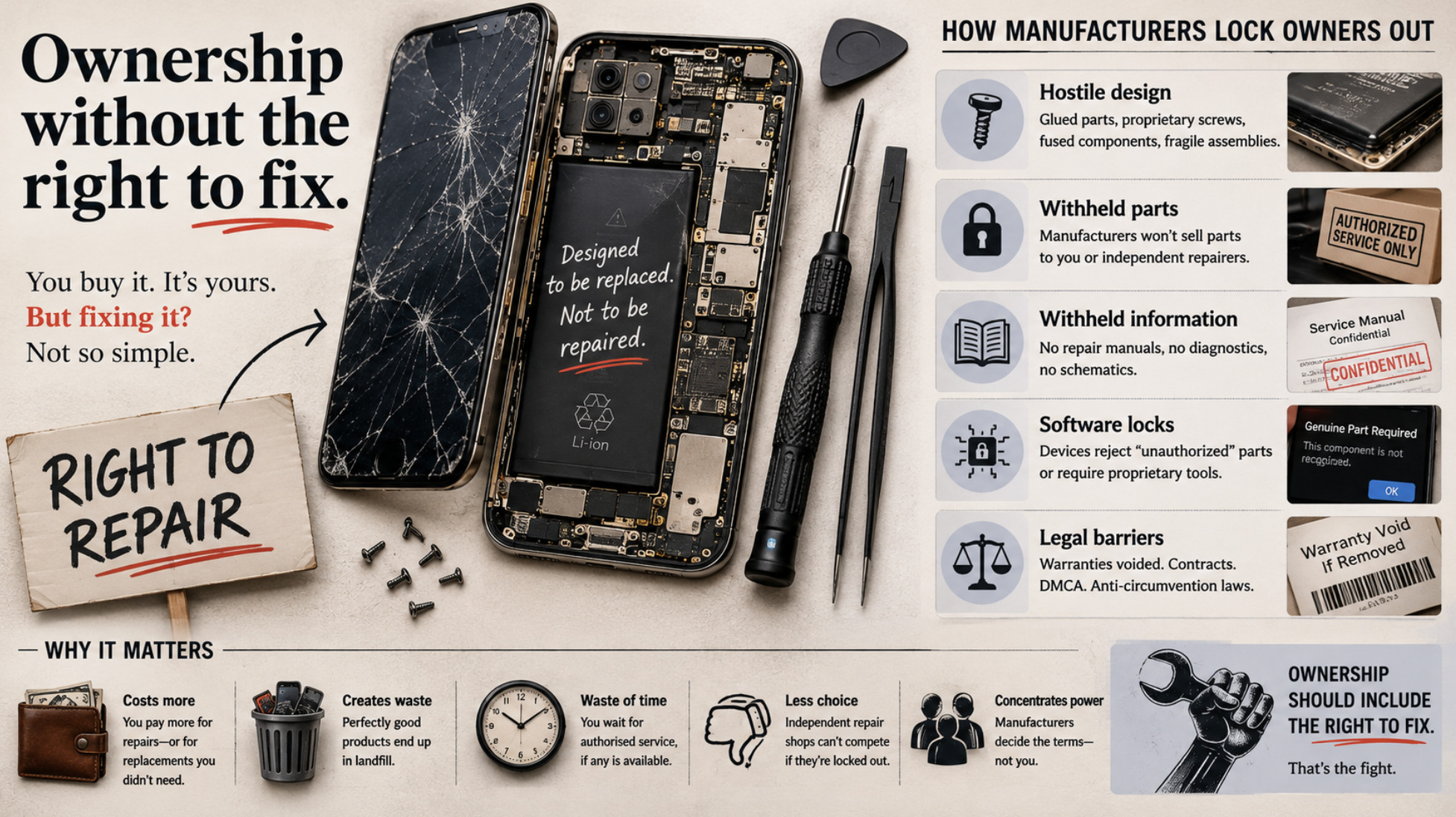
Ownership without the right to fix
Start with the premise, because it is more radical than it sounds. When you buy a physical product, you naturally assume you own it fully — that it is yours to use, modify, and repair as you see fit, the way people have owned tools and machines for centuries. For most of history this was simply true: a broken thing could be taken to any competent repairer, or fixed at your own kitchen table, because the knowledge and the parts were available and nothing stood in the way. Ownership included the right to maintain the thing you owned.
That assumption has quietly eroded. A growing number of manufacturers have made their products deliberately difficult or impossible for owners and independent shops to repair, through a combination of design and control that turns "you own it" into "you own it, but only we may fix it." The result is a peculiar, diminished form of ownership: you paid for the product, it sits in your home, and yet the right to repair it — one of the oldest privileges of owning anything — has been withdrawn. The right-to-repair movement exists to name this and to push back against it, insisting that ownership should still include the ability to fix.
How manufacturers lock owners out
The tactics that make repair difficult are worth spelling out, because they are deliberate design choices rather than accidents of complexity. Some are physical: parts glued in place rather than screwed, non-standard fasteners that require special tools, components fused together so that a single small failure means replacing a whole expensive assembly. A device built this way is not hard to repair because repair is inherently hard; it is hard to repair because it was engineered to be.
Other tactics are informational and legal, and these are often more powerful. Manufacturers frequently refuse to sell replacement parts to owners or independent repair shops, or decline to publish the repair manuals and diagnostic information that fixing a modern device requires. Increasingly, software is used as a lock: a device may detect a replacement part that did not come from the manufacturer and refuse to work with it, or require a proprietary tool to authorise a repair, so that even a physically successful fix is blocked electronically. Between hostile design, withheld parts and information, and software that rejects unauthorised repairs, manufacturers can make independent repair practically impossible while never quite saying it is forbidden. The lock is real even when it is invisible.
Who profits from making repair hard
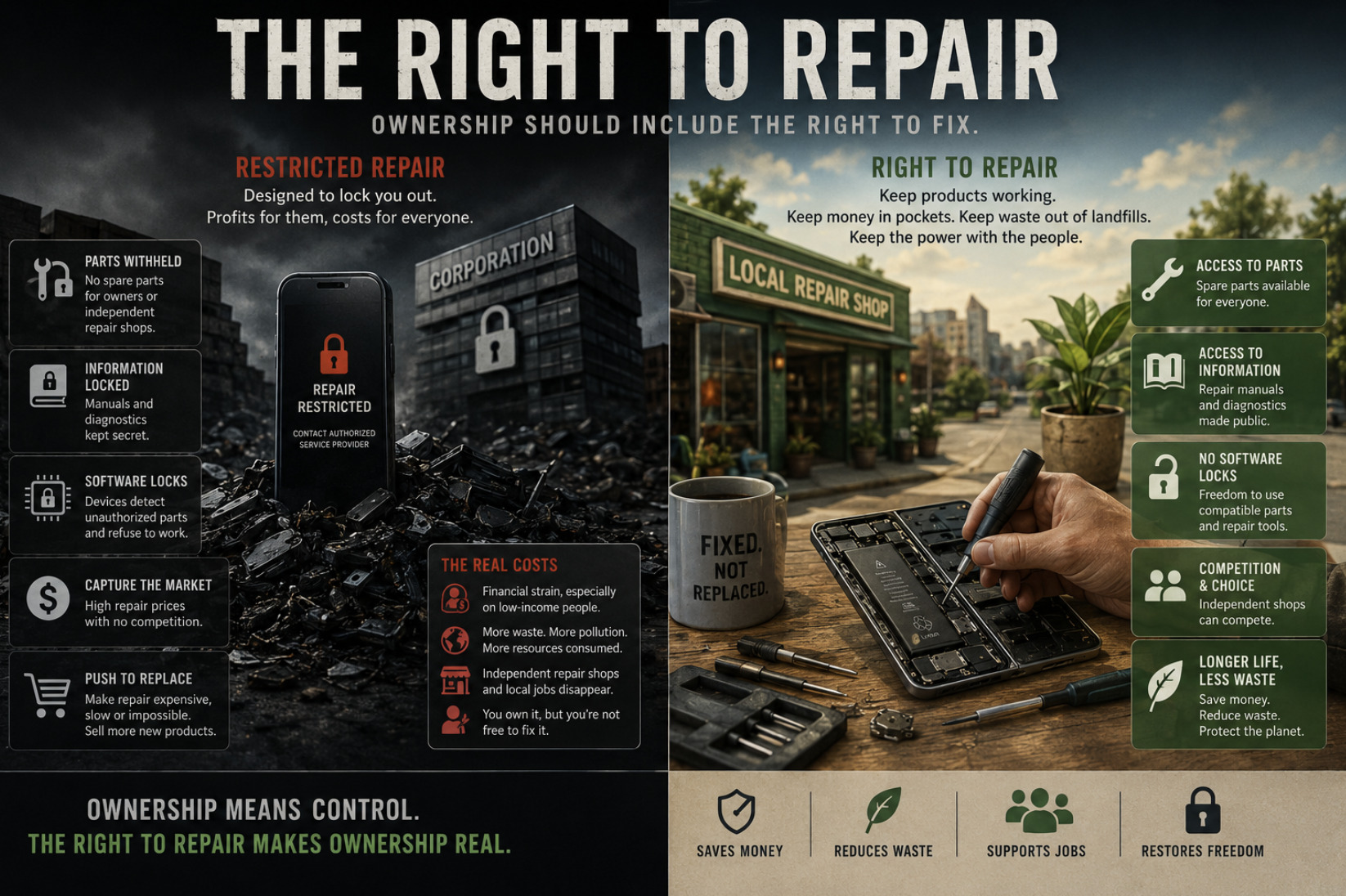
None of this is done for the customer's benefit, so it is worth being clear about who gains. The most direct beneficiary is the manufacturer, and the logic is straightforward. When independent repair is difficult, the manufacturer captures the repair market for itself, forcing owners to use its own authorised service at its own prices, which can be kept high precisely because there is no competition. A repair that a local shop might do cheaply becomes an expensive manufacturer-only job, and the profit flows to the company rather than to an independent repairer.
There is a second, larger prize: pushing people toward replacement instead of repair. When fixing a product is made expensive, slow or impossible, the rational choice for many owners becomes buying a new one — which is exactly what a manufacturer selling new products wants. A device that cannot be economically repaired is a device that must be replaced sooner, and every premature replacement is another sale. This is the quiet engine beneath the whole practice: making repair hard is not a side effect but a strategy, one that converts the natural longevity of a well-made product into a stream of forced repurchases. It is the same pattern of a business model quietly designed to extract more from ordinary people that recurs across the economy, from the arrangements we examined in non-compete clauses that quietly trap millions of low-wage workers to the pressures documented in the human cost of high-speed warehouse operations.
The costs that don't appear on the receipt
The harm of restricted repair goes well beyond the individual owner paying too much for a fix, and this is where the issue becomes genuinely public. The most obvious cost is financial, borne disproportionately by people with less money: when repair is unavailable or unaffordable, the poor are pushed hardest toward replacing things they could have kept, spending money they can least spare on products that should have lasted. A repair economy keeps things working for people who cannot simply buy new; its removal falls heaviest on them.
The environmental cost is larger still and almost entirely externalised. Every product replaced instead of repaired becomes waste, and manufacturing the replacement consumes resources and energy that a repair would have saved. A culture engineered toward replacement rather than repair generates mountains of discarded electronics and appliances that need never have been thrown away, an ecological toll that appears on no company's balance sheet but is paid by everyone. And there is a subtler loss: the erosion of independent repair shops, local businesses and the practical knowledge they hold, squeezed out when the parts and information they need are withheld. The costs of making repair hard are real, distributed, and quietly enormous — they simply do not appear on the receipt of the person forced to buy new.
Reclaiming the right to fix
What the right-to-repair movement is ultimately fighting for is the restoration of something people assumed they already had: the right to fix the things they own. Its demands are not radical — access to spare parts and repair information, an end to software locks that block legitimate repairs, and designs that do not make fixing needlessly impossible. These are the conditions that would let ownership mean what people always thought it meant, and let a competitive repair economy exist alongside the manufacturers rather than being strangled by them.
The reason this fight matters beyond the annoyance of an unfixable phone is that it is really about power and ownership in a world of increasingly complex, software-laden products. As more of what we buy becomes difficult to repair by design, the balance quietly shifts: owners are reduced to licensees of their own possessions, dependent on the manufacturer for the continued life of things they paid for outright. Whether people retain the practical right to maintain what they own, or whether that right migrates entirely to the companies that made it, is a question that will shape not just household budgets and landfills but the very meaning of buying something. It is exactly the kind of consequential struggle that unfolds quietly, in warranty fine print and software updates, while attention is elsewhere — and it deserves far more of that attention than it gets.
Frequently asked questions
What does "right to repair" mean? It is the principle that people who buy a product should be able to repair it themselves or through an independent shop — with access to spare parts, repair information and freedom from software locks — rather than being forced to use only the manufacturer's authorised service. The movement pushes back against practices that make independent repair difficult or impossible.
How do manufacturers make products hard to repair? Through deliberate design and control: gluing parts in place, using non-standard fasteners, fusing components so a small failure means replacing a whole assembly, refusing to sell parts or publish repair manuals, and using software that rejects non-authorised replacement parts. Together these make independent repair practically impossible without ever formally forbidding it.
Why do companies restrict repair? Mainly to profit. Restricting independent repair lets a manufacturer capture the repair market and charge high prices without competition, and — more importantly — pushes owners toward buying replacements when fixing is made expensive or impossible. Every premature replacement is another sale, so making repair hard is a strategy rather than an accident.